
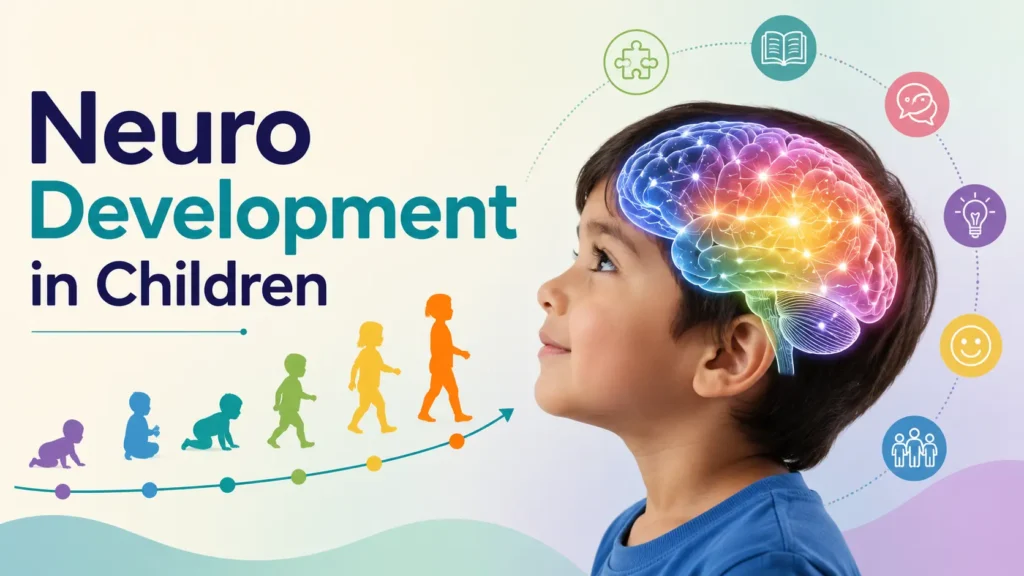
A child’s early years are very important for learning, growth, and emotional development. During this stage, the brain develops rapidly and builds the foundation for future skills. Understanding Neurodevelopment in children helps parents support healthy growth and identify any developmental concerns early.
Good nutrition, proper care, emotional support, and learning activities all contribute to healthy Child brain development. At the same time, strong Early childhood development helps children improve communication, social skills, and problem-solving abilities.
In this blog, you will learn about neuro development, important milestones, common developmental concerns, and ways parents can support healthy brain growth in children.
What Is Neurodevelopment in Children?
Neurodevelopment in children refers to the way a child’s brain grows and develops over time. This process affects learning, memory, movement, speech, emotions, and behavior.
Brain development begins before birth and continues through adolescence. However, the first few years are the most important because the brain develops very quickly during this period.
Healthy Child brain development allows children to think, learn, communicate, and interact with others effectively.
Importance of Early Childhood Development
Strong Early childhood development supports physical, emotional, social, and cognitive growth.
Learning and Communication Skills
Children begin learning language and communication skills during their early years.
Emotional Development
A supportive environment helps children express emotions and build confidence.
Social Interaction
Positive social experiences improve teamwork, sharing, and relationship-building skills.
Healthy Neurodevelopment in children supports overall personality and long-term success.
Stages of Child Brain Development
The brain develops step by step as children grow.
Infancy Stage
During infancy, babies begin recognizing voices, sounds, and facial expressions.
Toddler Stage
Toddlers learn to walk, speak simple words, and understand basic instructions.
Preschool Stage
Children improve memory, communication, and problem-solving abilities during this stage.
Strong Child brain development during these years supports future academic and social skills.
Factors That Affect Neurodevelopment
Several factors influence healthy brain growth in children.
Nutrition
Nutritious food supports healthy brain function and physical growth.
Foods rich in:
- Protein
- Iron
- Omega-3 fatty acids
- Vitamins
help improve Early childhood development.
Sleep
Adequate sleep helps the brain process learning and supports emotional balance.
Physical Activity
Exercise improves blood circulation and supports healthy Neurodevelopment in children.
Emotional Environment
Children need love, safety, and encouragement for healthy emotional growth.
Common Signs of Developmental Delays
Every child grows differently, but some signs may indicate developmental concerns.
Delayed Speech
Difficulty speaking or understanding language may require medical evaluation.
Limited Social Interaction
Children who avoid eye contact or social interaction may need developmental assessment.
Difficulty With Movement
Problems with walking, balance, or coordination can affect Child brain development.
Learning Challenges
Difficulty focusing or understanding instructions may require professional guidance.
Early identification improves treatment and support outcomes.
Role of Parents in Early Childhood Development
Parents play a major role in supporting healthy growth.
Encourage Learning Activities
Reading books, storytelling, and puzzles improve thinking and language skills.
Spend Quality Time Together
Positive interaction strengthens emotional bonds and supports Neurodevelopment in children.
Promote Healthy Habits
Balanced nutrition, physical activity, and proper sleep improve Early childhood development.
Limit Screen Time
Excessive screen use may affect communication and social skills in young children.
Importance of Nutrition for Brain Development
Healthy eating habits are essential for proper brain growth.
Brain-Healthy Foods
Foods that support Child brain development include:
- Eggs
- Fish
- Fruits
- Vegetables
- Whole grains
Hydration
Drinking enough water supports concentration and brain function.
Avoid Excess Junk Food
Highly processed foods may negatively affect energy and concentration.
Healthy nutrition improves focus, memory, and overall Neurodevelopment in children.
Importance of Early Medical Check-Ups
Routine medical visits help monitor developmental milestones.
Growth Monitoring
Doctors evaluate height, weight, speech, and learning progress.
Early Diagnosis
Early detection of developmental issues improves treatment success.
Vaccinations and Preventive Care
Regular healthcare visits support healthy Early childhood development.
Consulting pediatric specialists helps parents understand their child’s developmental needs better.
Activities That Support Child Brain Development
Simple daily activities can strengthen brain function and learning skills.
Reading and Storytelling
Books improve vocabulary, imagination, and communication.
Music and Art
Creative activities encourage emotional expression and learning.
Outdoor Play
Physical activity improves coordination and supports healthy Child brain development.
Problem-Solving Games
Puzzles and educational games improve memory and thinking abilities.
These activities positively influence Neurodevelopment in children.
Importance of Social Interaction
Children learn important life skills through interaction with others.
Building Communication Skills
Talking with family and friends improves language development.
Emotional Understanding
Social experiences teach empathy and emotional control.
Confidence Building
Positive interactions improve self-confidence and independence.
Healthy social development supports successful Early childhood development.
When Should Parents Seek Professional Help?
Parents should consult a specialist if they notice:
- Delayed speech
- Difficulty learning
- Poor coordination
- Behavioral concerns
- Lack of social interaction
Early support improves developmental outcomes and helps children reach their full potential.
Technology and Child Development
Technology can support learning when used properly.
Educational Apps and Videos
Interactive educational tools can improve learning and creativity.
Balanced Usage
Parents should monitor screen time and encourage real-world interaction.
Balanced technology use supports healthy Child brain development without affecting social skills.
Tips for Supporting Healthy Neurodevelopment
Parents can take simple steps to encourage healthy growth.
Maintain Daily Routines
Consistent schedules improve emotional stability and learning.
Encourage Curiosity
Allow children to explore and ask questions.
Provide Emotional Support
Positive encouragement builds confidence and emotional health.
Attend Regular Health Check-Ups
Routine medical care supports healthy Neurodevelopment in children and early intervention when needed.
Conclusion
Healthy Neurodevelopment in children plays a major role in learning, emotional well-being, and overall growth. The early years are especially important because the brain develops rapidly during this stage.
Parents can support healthy Child brain development by providing proper nutrition, emotional care, learning opportunities, and regular medical check-ups. At the same time, strong Early childhood development helps children build confidence, communication skills, and healthy social relationships.
Small daily efforts can make a big difference in your child’s future. Early support, healthy habits, and a nurturing environment help children grow into happy and confident individuals.