
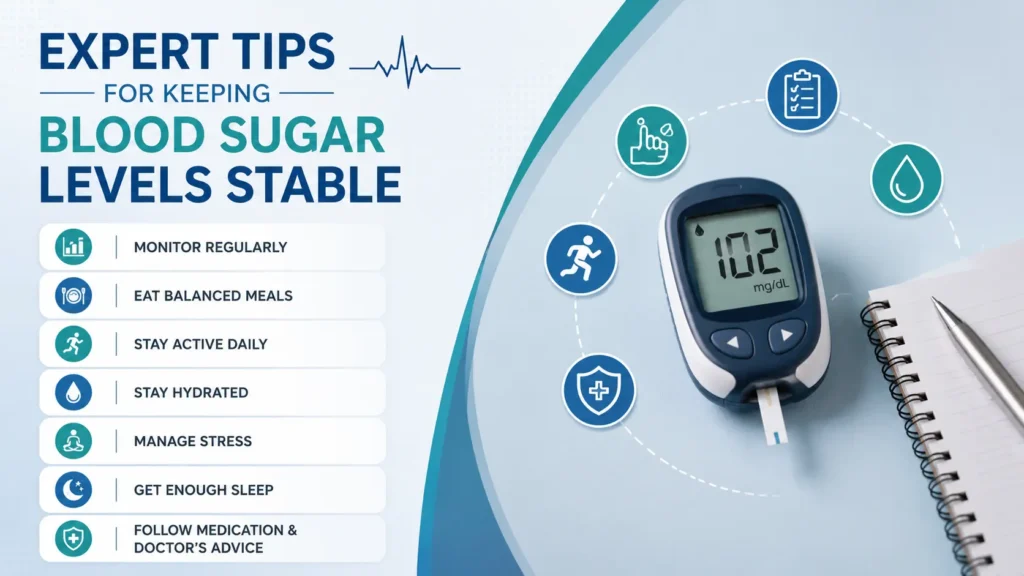
Maintaining healthy Blood sugar levels is one of the most important aspects of overall wellness. Stable blood sugar helps the body function properly, provides consistent energy, and reduces the risk of serious health complications. On the other hand, fluctuating glucose levels can lead to fatigue, mood changes, and long-term health problems.
Many people do not recognize the early Diabetes symptoms until blood sugar becomes difficult to manage. Therefore, understanding how to keep glucose levels balanced is essential for both diabetes prevention and long-term health management.
In this blog, we will explore expert tips to help maintain healthy blood sugar, recognize warning signs, and make lifestyle changes that support better health.
Understanding Blood Sugar Levels
Blood sugar levels refer to the amount of glucose present in the bloodstream. Glucose serves as the body’s primary energy source and comes mainly from the foods we eat.
The hormone insulin helps move glucose from the bloodstream into cells, where it is used for energy. When this process becomes less effective, blood sugar levels may rise and increase the risk of diabetes.
Keeping Blood sugar levels within a healthy range supports heart health, brain function, and overall well-being.
Common Diabetes Symptoms to Watch For
Recognizing early Diabetes symptoms can help prevent complications and encourage timely medical care.
Some common symptoms include:
- Frequent urination
- Increased thirst
- Constant hunger
- Fatigue
- Blurred vision
- Slow wound healing
- Unexplained weight changes
Many people overlook these Diabetes symptoms because they develop gradually. However, early intervention often leads to better health outcomes.
Follow a Balanced Diet
Food plays a major role in controlling glucose levels.
Choose High-Fiber Foods
Fiber slows the absorption of sugar into the bloodstream. As a result, it helps maintain stable Blood sugar levels throughout the day.
Good sources of fiber include:
- Vegetables
- Fruits
- Whole grains
- Beans
- Lentils
Include Lean Protein
Protein helps control hunger and supports muscle health.
Healthy protein sources include:
- Fish
- Chicken
- Eggs
- Tofu
- Low-fat dairy products
Select Healthy Fats
Healthy fats improve satiety and support heart health.
Examples include:
- Avocados
- Nuts
- Seeds
- Olive oil
A balanced diet remains one of the most effective strategies for maintaining healthy Blood sugar levels.
Avoid Excess Sugar and Refined Carbohydrates
Sugary foods and refined carbohydrates can cause rapid spikes in glucose.
Foods to limit include:
- Soft drinks
- Candy
- Cakes
- White bread
- Pastries
Instead, choose complex carbohydrates that provide steady energy and help prevent sudden increases in blood sugar.
Reducing sugar intake may also lower the risk of developing severe Diabetes symptoms in the future.
Stay Physically Active
Regular exercise improves insulin sensitivity and helps the body use glucose more effectively.
Benefits of Exercise
Physical activity can:
- Improve blood circulation
- Support weight management
- Reduce insulin resistance
- Increase energy levels
Activities such as walking, cycling, swimming, and yoga can help maintain healthy Blood sugar levels.
Exercise Consistently
Aim for regular physical activity throughout the week rather than exercising occasionally. Consistency produces better long-term results.
Maintain a Healthy Weight
Excess body weight often increases insulin resistance. Consequently, weight management plays a significant role in glucose control.
Even modest weight loss can improve insulin function and reduce the likelihood of developing Diabetes symptoms.
Healthy eating combined with regular exercise provides the most effective approach to weight management.
Stay Hydrated
Water supports many important bodily functions, including glucose regulation.
Benefits of Drinking Water
Proper hydration helps:
- Improve circulation
- Support kidney function
- Remove excess glucose through urine
- Prevent dehydration
Replacing sugary beverages with water can contribute to healthier Blood sugar levels and overall wellness.
Get Enough Sleep
Sleep directly affects metabolism and hormone balance.
How Sleep Impacts Blood Sugar
Poor sleep may:
- Increase insulin resistance
- Raise stress hormone levels
- Increase appetite
- Affect energy levels
Adults should aim for consistent, high-quality sleep to support healthy Blood sugar levels and better metabolic health.
Manage Stress Effectively
Stress affects both physical and mental health. It can also influence glucose levels.
Stress and Blood Sugar
When stress increases, the body releases hormones that may raise blood sugar levels.
Effective stress management techniques include:
- Deep breathing exercises
- Meditation
- Yoga
- Spending time outdoors
- Engaging in hobbies
Managing stress can help reduce the risk of worsening Diabetes symptoms and improve overall well-being.
Monitor Blood Sugar Regularly
Regular monitoring provides valuable information about how the body responds to food, activity, and medication.
Benefits of Monitoring
Monitoring helps individuals:
- Track daily glucose patterns
- Identify triggers
- Adjust lifestyle habits
- Evaluate treatment effectiveness
People with diabetes should follow their healthcare provider’s recommendations regarding blood sugar monitoring.
Do Not Skip Meals
Skipping meals may cause fluctuations in glucose levels and increase hunger later in the day.
Eat at Regular Intervals
Regular meal timing helps:
- Maintain steady energy
- Prevent overeating
- Improve glucose regulation
Consistent eating patterns support stable Blood sugar levels and overall metabolic health.
Choose Healthy Snacks
Smart snacking can help prevent sudden drops or spikes in blood sugar.
Healthy snack options include:
- Nuts
- Greek yogurt
- Fresh fruit
- Vegetable sticks
- Whole-grain crackers
Nutritious snacks support balanced energy levels and reduce unhealthy cravings.
Limit Alcohol Consumption
Alcohol can affect blood sugar in different ways depending on the amount consumed and whether food is eaten alongside it.
Moderation is important for maintaining stable glucose levels and preventing complications.
Individuals with diabetes should discuss alcohol consumption with their healthcare provider.
Schedule Regular Health Check-Ups
Routine medical visits play a critical role in preventing complications and monitoring overall health.
Healthcare professionals can:
- Evaluate glucose control
- Screen for complications
- Review medications
- Provide personalized recommendations
Regular check-ups also help identify early Diabetes symptoms before they become more serious.
Create Long-Term Healthy Habits
Maintaining stable glucose levels requires consistency rather than short-term efforts.
Some practical habits include:
- Planning meals in advance
- Staying active daily
- Drinking enough water
- Managing stress
- Monitoring blood sugar regularly
- Prioritizing sleep
These habits support healthy Blood sugar levels and contribute to long-term wellness.
When to Seek Medical Advice
Seek professional medical guidance if you experience:
- Persistent fatigue
- Frequent thirst
- Frequent urination
- Blurred vision
- Unexpected weight loss
These may be important Diabetes symptoms that require further evaluation.
Early diagnosis often leads to more effective treatment and better health outcomes.
Conclusion
Maintaining healthy Blood sugar levels is essential for preventing complications and supporting overall health. A balanced diet, regular exercise, proper hydration, stress management, and quality sleep all contribute to better glucose control.
Recognizing early Diabetes symptoms allows individuals to seek timely medical care and make positive lifestyle changes. Small daily habits can make a significant difference over time.
By following these expert tips and working closely with healthcare professionals, you can support stable blood sugar levels and enjoy a healthier, more active life.