
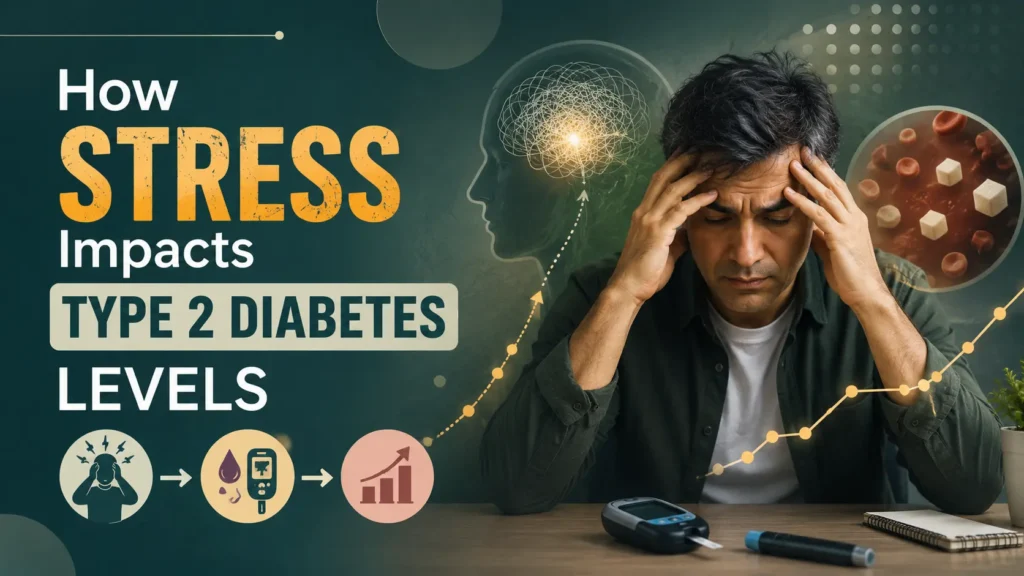
Stress affects both mental and physical health. For people living with diabetes, stress can make blood sugar management more difficult. Many individuals with Type 2 diabetes notice changes in their glucose levels during stressful situations. While occasional stress is normal, long-term stress can affect hormone balance, eating habits, sleep, and overall health.
Understanding the connection between stress and diabetes helps people manage their condition more effectively. At the same time, healthy lifestyle changes may support Type 2 diabetes reversal in some individuals when combined with proper medical guidance. Recognizing early Type 2 diabetes symptoms and managing stress properly can improve long-term health outcomes.
In this blog, you will learn how stress affects diabetes levels, common symptoms, lifestyle changes, and practical ways to reduce stress naturally.
Understanding Type 2 Diabetes
Type 2 diabetes is a condition in which the body cannot use insulin effectively. As a result, blood sugar levels rise and affect different organs over time.
Common causes include:
- Poor diet
- Lack of exercise
- Obesity
- Family history
- Chronic stress
Many people ignore early Type 2 diabetes symptoms, which may delay diagnosis and treatment.
Common Type 2 Diabetes Symptoms
Recognizing symptoms early can help prevent complications.
Frequent Urination
High blood sugar causes the body to remove excess glucose through urine.
Increased Thirst
People with diabetes often feel thirsty because the body loses fluids more quickly.
Fatigue
Constant tiredness is one of the common Type 2 diabetes symptoms linked to unstable blood sugar levels.
Blurred Vision
Changes in blood sugar can affect eye health and vision clarity.
Early medical care and healthy lifestyle habits improve diabetes management and may support Type 2 diabetes reversal in certain cases.
How Stress Affects Blood Sugar Levels
Stress triggers hormonal changes in the body.
Stress Hormones and Blood Sugar
When the body experiences stress, it releases hormones like cortisol and adrenaline. These hormones increase blood sugar levels to provide energy for the body.
For people with Type 2 diabetes, this process can make blood sugar harder to control.
Emotional Stress and Eating Habits
Stress often affects eating patterns. Some people overeat unhealthy foods, while others skip meals completely.
Poor eating habits can worsen Type 2 diabetes symptoms and affect daily glucose control.
Reduced Physical Activity
Stress may lower motivation for exercise and healthy routines.
Lack of physical activity affects insulin sensitivity and makes Type 2 diabetes reversal more challenging.
Connection Between Sleep and Diabetes
Stress often affects sleep quality.
Poor Sleep Increases Blood Sugar
Lack of sleep can increase insulin resistance and affect metabolism.
Fatigue and Mood Changes
Sleep deprivation can worsen stress and increase emotional eating habits.
Healthy sleep patterns improve overall Type 2 diabetes management and support better energy levels.
Can Stress Increase Diabetes Complications?
Long-term stress may increase the risk of health complications.
Heart Disease Risk
High stress and uncontrolled diabetes can affect heart health.
Weight Gain
Stress hormones may increase cravings for sugary and processed foods.
Weak Immune System
Chronic stress can weaken immunity and slow healing.
Managing stress helps reduce severe Type 2 diabetes symptoms and improves overall wellness.
Role of Lifestyle in Type 2 Diabetes Reversal
Healthy lifestyle changes can improve insulin sensitivity and blood sugar control.
Healthy Eating Habits
Balanced meals help stabilize glucose levels.
Choose foods such as:
- Vegetables
- Whole grains
- Lean proteins
- Healthy fats
Healthy eating supports Type 2 diabetes reversal and reduces blood sugar fluctuations.
Regular Exercise
Exercise helps the body use insulin more effectively.
Walking, yoga, cycling, and swimming improve circulation and support Type 2 diabetes management.
Weight Management
Maintaining a healthy weight improves insulin sensitivity and lowers the risk of complications.
Stress Management Techniques for Diabetes
Managing stress is important for better blood sugar control.
Practice Deep Breathing
Deep breathing exercises help calm the mind and reduce tension.
Meditation and Yoga
Meditation improves emotional balance and reduces stress hormones.
Yoga supports both physical and mental health while helping manage Type 2 diabetes symptoms.
Stay Socially Connected
Talking with family or friends helps reduce emotional stress.
Take Breaks and Relax
Short breaks during busy schedules improve mental focus and relaxation.
These habits support better glucose control and may help with Type 2 diabetes reversal efforts.
Importance of Regular Blood Sugar Monitoring
Monitoring blood sugar helps patients understand how stress affects their body.
Track Daily Changes
Checking glucose levels regularly helps identify patterns related to stress, diet, and activity.
Follow Medical Advice
Doctors may adjust treatment plans based on blood sugar readings.
Proper monitoring supports long-term Type 2 diabetes management and reduces health risks.
Importance of Medical Check-Ups
Routine health check-ups help detect complications early.
Doctors may monitor:
- Blood sugar levels
- Blood pressure
- Cholesterol
- Weight changes
Regular medical care helps manage Type 2 diabetes symptoms and supports healthier outcomes.
Foods That Help Reduce Stress and Improve Diabetes Control
Certain foods support emotional balance and stable blood sugar.
Foods Rich in Magnesium
Nuts, seeds, and leafy vegetables help relax muscles and reduce stress.
Omega-3 Fatty Acids
Fish and flaxseeds support heart and brain health.
High-Fiber Foods
Fiber slows sugar absorption and improves digestion.
Healthy nutrition plays a major role in Type 2 diabetes reversal strategies.
Warning Signs You Should Not Ignore
Seek medical attention if you notice:
- Extremely high blood sugar
- Frequent dizziness
- Severe fatigue
- Chest pain
- Vision changes
Ignoring symptoms may worsen Type 2 diabetes and increase complications.
Tips for Long-Term Diabetes Management
Simple daily habits can improve health significantly.
Stay Physically Active
Regular movement supports better blood sugar control.
Maintain a Routine
Consistent meal timing and sleep improve metabolism.
Avoid Smoking and Excess Alcohol
These habits increase health risks and worsen diabetes complications.
Focus on Mental Wellness
Emotional health is just as important as physical health in diabetes management.
These habits reduce stress and support long-term Type 2 diabetes reversal goals.
Conclusion
Stress can significantly affect blood sugar levels and overall health in people with Type 2 diabetes. Chronic stress may worsen glucose control, increase cravings, and affect sleep and physical activity.
Recognizing early Type 2 diabetes symptoms and making healthy lifestyle changes can improve daily management and overall well-being. In some cases, consistent healthy habits may also support Type 2 diabetes reversal under medical supervision.
Managing stress through exercise, healthy eating, proper sleep, and relaxation techniques can help improve both mental and physical health. Small daily changes can make a big difference in long-term diabetes care.