
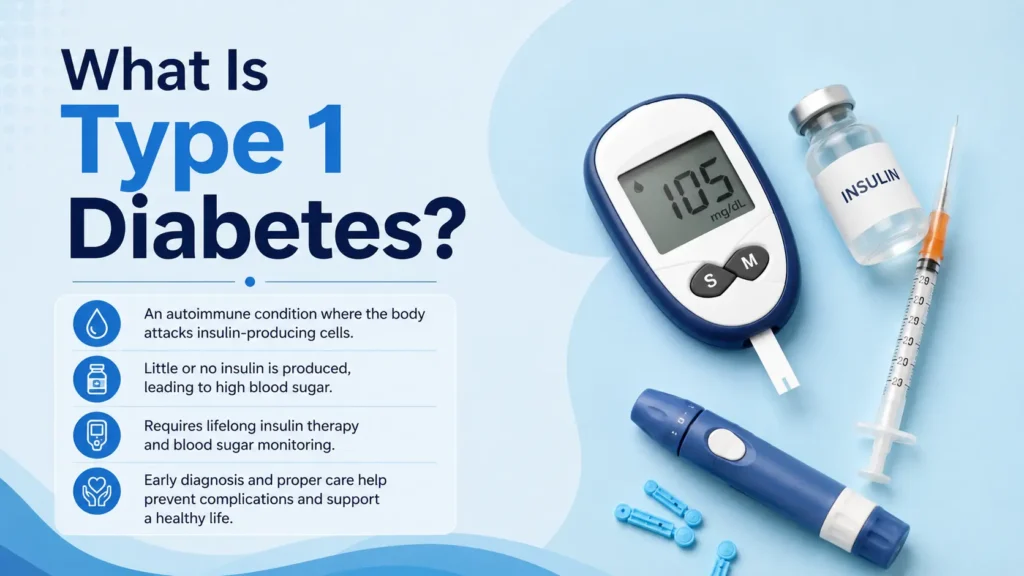
Type 1 diabetes is a lifelong health condition that affects how the body uses glucose for energy. Unlike Type 2 diabetes, this condition occurs when the immune system mistakenly attacks the insulin-producing cells in the pancreas. As a result, the body cannot produce enough insulin to regulate Blood sugar levels.
Although Type 1 diabetes is commonly diagnosed in children and young adults, it can develop at any age. Early diagnosis, proper treatment, and healthy lifestyle habits help people live active and healthy lives. Understanding the causes, recognizing the symptoms, and learning the right care strategies are essential for preventing serious complications.
In this blog, you will learn about Type 1 diabetes, its causes, symptoms, diagnosis, treatment options, and practical tips for managing the condition effectively.
What Is Type 1 Diabetes?
Type 1 diabetes is an autoimmune disease in which the immune system destroys the insulin-producing beta cells in the pancreas. Since insulin helps move glucose from the bloodstream into the body’s cells, the lack of insulin causes glucose to build up in the blood.
Without treatment, high Blood sugar levels can damage important organs such as the heart, kidneys, eyes, and nerves.
Unlike Type 2 diabetes, Type 1 diabetes is not caused by lifestyle choices or obesity. People with this condition require insulin therapy throughout their lives.
What Causes Type 1 Diabetes?
The exact cause of Type 1 diabetes is still not fully understood. However, researchers believe that several factors may contribute to its development.
Autoimmune Response
The immune system mistakenly attacks healthy insulin-producing cells in the pancreas.
Genetic Factors
People with a family history of diabetes may have a slightly higher risk, although many individuals develop the condition without any family history.
Environmental Triggers
Certain viral infections or environmental factors may trigger the immune response in genetically susceptible individuals.
Although these factors may increase risk, there is currently no guaranteed way to prevent Type 1 diabetes.
Common Symptoms of Type 1 Diabetes
Symptoms often develop quickly and may become severe if left untreated.
Common symptoms include:
- Frequent urination
- Increased thirst
- Constant hunger
- Sudden weight loss
- Extreme tiredness
- Blurred vision
- Irritability
- Slow wound healing
These symptoms occur because high Blood sugar levels prevent the body’s cells from receiving the energy they need.
If these warning signs appear, immediate medical evaluation is important.
How Type 1 Diabetes Is Diagnosed
Doctors use several tests to diagnose Type 1 diabetes accurately.
Common diagnostic tests include:
- Fasting blood sugar test
- Random blood sugar test
- HbA1c test
- Autoantibody tests
- C-peptide test
These tests help determine whether the body is producing insulin and whether Blood sugar levels remain consistently elevated.
Early diagnosis allows treatment to begin before serious complications develop.
Why Blood Sugar Levels Matter
Maintaining healthy Blood sugar levels is the foundation of diabetes management.
When blood sugar remains too high for long periods, complications may develop, including:
- Heart disease
- Kidney damage
- Vision problems
- Nerve damage
- Poor wound healing
On the other hand, blood sugar that drops too low can also become dangerous.
Regular monitoring helps people understand how food, exercise, illness, and insulin affect their glucose levels.
Treatment Options for Type 1 Diabetes
Although there is currently no cure for Type 1 diabetes, effective treatments help manage the condition successfully.
Insulin Therapy
Insulin replaces the hormone the body can no longer produce.
Depending on individual needs, insulin may be administered through:
- Insulin injections
- Insulin pens
- Insulin pumps
Healthcare providers determine the most appropriate insulin regimen for each patient.
Blood Sugar Monitoring
Checking Blood sugar levels several times each day helps individuals adjust meals, activity, and insulin doses safely.
Many people also use continuous glucose monitoring systems for more accurate tracking.
Healthy Eating for Type 1 Diabetes
Nutrition plays a major role in diabetes management.
Healthy meal planning helps maintain stable Blood sugar levels and supports overall health.
Choose foods such as:
- Fresh vegetables
- Whole grains
- Lean protein
- Healthy fats
- Fruits in moderation
Limiting sugary drinks and highly processed foods can also improve blood sugar control.
Working with a registered dietitian can make meal planning easier.
Importance of Regular Exercise
Physical activity provides many health benefits for people with Type 1 diabetes.
Exercise helps:
- Improve insulin sensitivity
- Support heart health
- Maintain a healthy weight
- Reduce stress
- Increase energy
Walking, swimming, cycling, and yoga are excellent options.
However, people should monitor Blood sugar levels before and after exercise to prevent unexpected changes.
Recognizing High and Low Blood Sugar
Understanding glucose fluctuations helps prevent emergencies.
High Blood Sugar
Symptoms include:
- Increased thirst
- Frequent urination
- Fatigue
- Blurred vision
Low Blood Sugar
Symptoms include:
- Sweating
- Shaking
- Dizziness
- Confusion
- Rapid heartbeat
Prompt treatment helps restore safe Blood sugar levels and prevents serious complications.
Preventing Diabetes Complications
Although Type 1 diabetes requires lifelong care, complications can often be reduced through consistent management.
Helpful habits include:
- Taking insulin exactly as prescribed
- Monitoring blood sugar regularly
- Eating balanced meals
- Staying physically active
- Drinking enough water
- Getting adequate sleep
- Attending regular medical appointments
These simple steps contribute to better long-term health.
Emotional Well-Being and Diabetes
Managing a chronic condition can sometimes feel overwhelming.
People living with Type 1 diabetes may experience stress, anxiety, or frustration.
Helpful coping strategies include:
- Joining support groups
- Speaking with healthcare professionals
- Practicing relaxation techniques
- Staying connected with family and friends
Mental health is an important part of successful diabetes management.
Importance of Regular Medical Check-Ups
Routine healthcare visits help monitor overall health and detect complications early.
Doctors may evaluate:
- HbA1c levels
- Blood pressure
- Cholesterol
- Kidney function
- Eye health
- Foot health
Regular evaluations help maintain healthy Blood sugar levels and improve treatment outcomes.
Daily Tips for Living with Type 1 Diabetes
Managing diabetes becomes easier with healthy daily habits.
Helpful tips include:
- Never skip insulin doses.
- Monitor blood sugar consistently.
- Carry healthy snacks when traveling.
- Stay physically active.
- Drink enough water.
- Follow a regular meal schedule.
- Learn to recognize symptoms of high and low blood sugar.
- Attend scheduled medical appointments.
These habits help people manage Type 1 diabetes confidently and safely.
Conclusion
Living with Type 1 diabetes requires daily attention, but with the right care, individuals can lead healthy and active lives. Early diagnosis, insulin therapy, balanced nutrition, regular exercise, and consistent monitoring of Blood sugar levels all play an important role in effective diabetes management.
Learning about the condition and following a personalized treatment plan can reduce the risk of complications and improve quality of life. By working closely with healthcare professionals and maintaining healthy lifestyle habits, people with Type 1 diabetes can successfully manage their condition for years to come.